


Your guide to buying property in Spain.
Mediterranean beaches, a mild climate, golf communities and an outdoor way of life make the Costa Blanca one of Spain’s most appealing destinations for international property buyers. Along the coast of Alicante province, in south-eastern Spain, you can choose between lively seaside towns, established international neighbourhoods and quieter settings with more space.
On the Costa Blanca, you can choose between new-build developments and resale properties. This guide explains the main buying steps and the differences to know, with more detail on new builds, our main area of expertise. Start by comparing the two options, then explore the areas, property types and costs.
Explore the Costa Blanca: its areas, lifestyle and properties →
Buying to rent out?
If rental income is part of your plan, discuss it with your agent from the start, especially if you want to run tourist rentals as a business. This helps shape your shortlist around the right locations, properties and rental model.
Before reserving, have your lawyer confirm that your intended use is allowed.
Your new-build buying journey
Choosing the right property
Take your time exploring areas and viewing properties. The aim is to find a place that suits your plans, your budget and the way you want to spend time in Spain.
01 · Define your priorities
Talk with your agent about how you will use the property, when you want to buy and your total budget. List your must-haves and the features you would enjoy. This makes it easier to choose between locations, views, space and privacy. If you need a mortgage, explore your options early.
02 · Shortlist, view and compare
Visit the areas and developments you like, then compare individual properties. Look at the layout, sunlight and surroundings. Ask your agent about the developer’s reputation and what each location is like throughout the year.
03 · Know the costs and next steps
Before you reserve, understand the total cost, what is included, when payments are due and the expected handover date. Your agent explains the offer; your independent lawyer checks the contract and your protections.
Reserve your chosen property
The reservation takes the property off the market for the reservation period. It is part of the property price. If you change your mind, you will normally lose this payment; your lawyer explains any exceptions before you sign.
Contract & construction
Your lawyer checks the purchase contract before you sign. You then make payments on the schedule discussed before reservation. Keep the construction updates and any changes you agree with the developer.
Completion & handover
Your agent coordinates the final steps with the developer and your advisers. Once the checks are complete, you sign at the notary, pay the remaining price with your own funds or an approved mortgage, and receive the keys.
Timing depends on the development. A completed property can have a short purchase process. Buying off-plan usually means waiting for construction to finish.
The Costa Blanca: location & areas
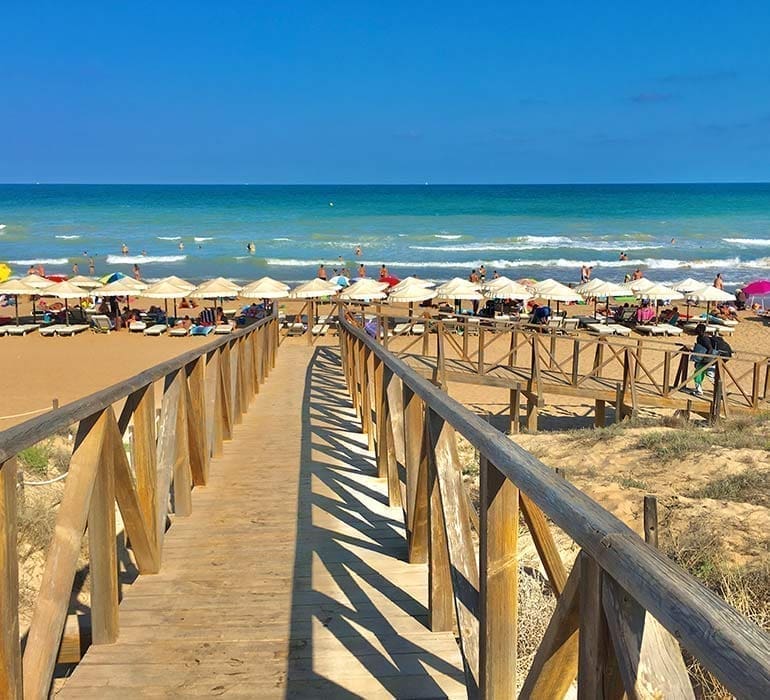
Guardamar del Segura · sandy beaches on the southern Costa Blanca, Spain.
What and where is the Costa Blanca?
The name means “White Coast”. The Costa Blanca is the Mediterranean coast of Alicante province, in south-eastern Spain, within the Valencian Community. Its beaches, outdoor lifestyle and variety of towns have helped it become an established destination for international buyers. In 2025, Alicante had Spain’s highest provincial share of residential property purchases by foreign buyers, according to Registradores’ annual report.
The south combines long sandy beaches with established towns and residential communities. The north offers coves, hillsides and mountain backdrops. Alicante adds city life, while inland towns and golf communities offer other ways to enjoy the region.
Planning your viewing trip: Alicante–Elche Miguel Hernández Airport is a useful starting point. Check the journey to each shortlisted development.
Our listings also cover neighbouring Costa Cálida in Murcia, including Los Alcázares, Torre Pacheco and San Pedro del Pinatar.
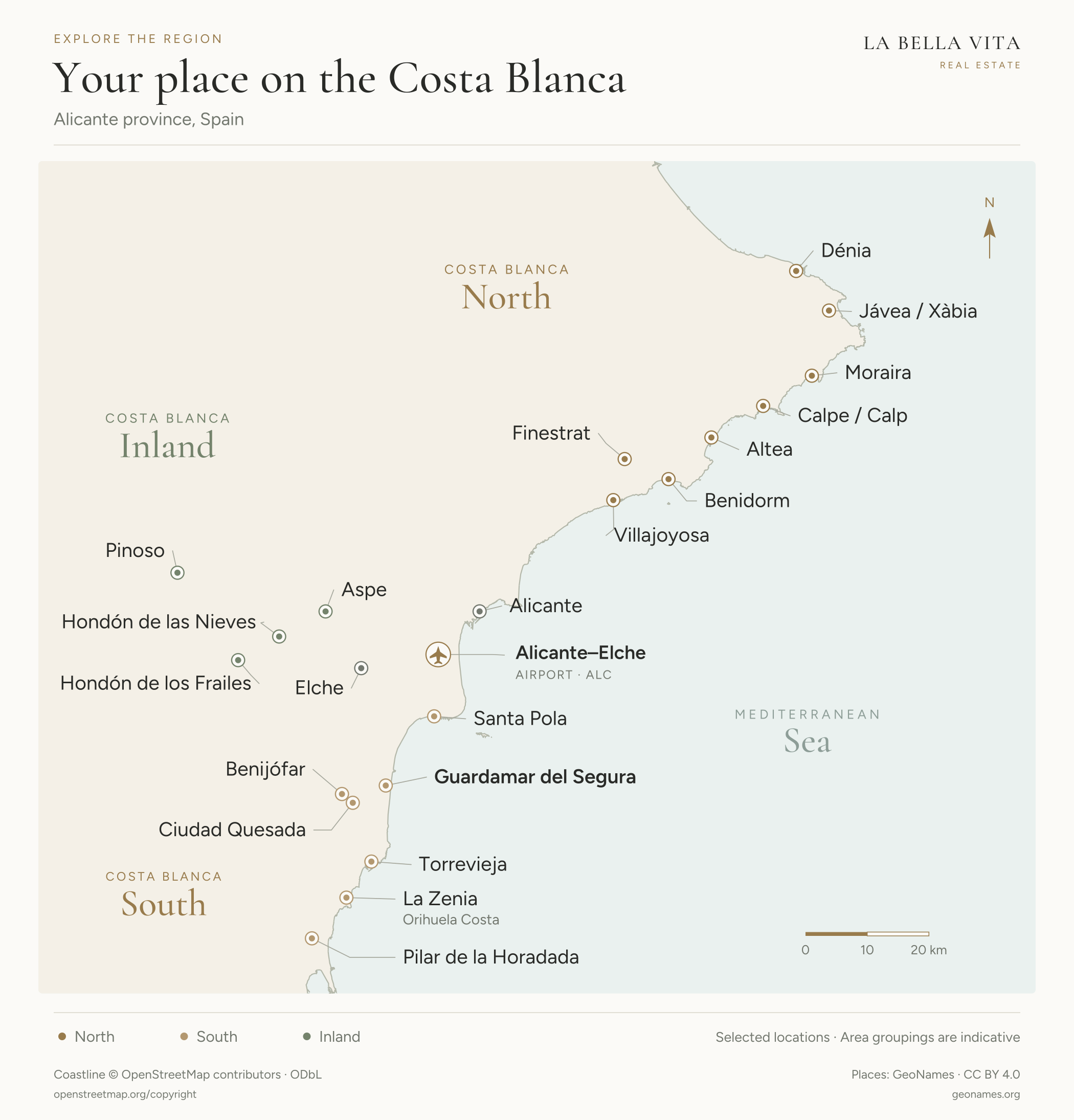
Choose an area for your plans
Start with how you will use the property: holidays, living here, a future move or renting it out. Think about the places you would like to reach on foot, how much driving suits you and the surroundings you enjoy.
Costa Blanca South
Start with Torrevieja, Pilar de la Horadada, Rojales and Ciudad Quesada, Guardamar and Benijófar. The wider southern market also includes Orihuela Costa, San Miguel de Salinas and Los Montesinos.
The south often has lower starting prices than the best-known northern coastal towns, with plenty of new developments to explore. Beachfront properties and premium golf communities can cost more.
Costa Blanca North
Finestrat, Villajoyosa, Benitachell, Polop and Calpe offer a mix of coastal, hillside and residential settings. Further options include Benissa, El Verger, Dénia and Jávea.
Popular northern coastal towns often have higher property prices, especially for sea views and sought-after locations. Nearby residential areas can offer more space for your budget.
Inland communities
Hondón de las Nieves, Pinoso, Aspe, La Romana, Llíber and Rafal are examples of the inland towns and valleys of Alicante province.
Explore these areas if you enjoy countryside, village life and outdoor space. Check the drive to shops, the airport and the coast.
Alicante and nearby coast
Alicante, El Campello and Mutxamel offer different combinations of city access, established services and residential neighbourhoods. Santa Pola and Gran Alacant are further options south of the city.
Check public transport, walking routes and beach access for the specific development.
Golf communities: another way to enjoy the Costa Blanca
Golf communities can appeal for their open green surroundings, outdoor lifestyle and social setting, whether or not you play. Options include La Finca Golf in Algorfa, Vistabella Golf, Las Colinas Golf and La Marquesa around Ciudad Quesada.
Many buyers enjoy the gardens, shared pools and sense of community. Some developments also have gated access and security. Community fees help pay for the facilities and services provided.
Explore golf communities & properties →
View Vistabella Golf properties →
Ask your agent what each location is like throughout the year. Which shops and restaurants stay open in winter? How busy does it get in summer? This helps you picture everyday life beyond your viewing visit.
Spend time in the neighbourhood too. Try the walking routes and look for the services that matter to you. If the development is still being built, ask when the roads, gardens and shared facilities will be ready.
Choosing your property: new build or resale
New-build properties
A brand-new property bought from a developer, either off-plan, during construction or completed.
- Modern layouts, fittings and energy features.
- Finish choices may be available when buying early.
- Off-plan purchases involve a construction timetable and staged payments.
Resale properties
An existing property bought from its current owner.
- View the actual property and established surroundings.
- Choose a property to enjoy as it is or update to your taste.
- Check its condition, any work needed and the seller’s handover timing.
Why choose a new-build property?
A new-build property brings together timeless Mediterranean living and the pleasure of buying brand new. Modern layouts, outdoor spaces and new fittings make it an appealing choice for holidays or a future move to Spain.
- Comfort and energy efficiency: better insulation, windows and modern systems can make a property more comfortable and efficient than many older buildings.
- Your choice of finishes: buying early may let you choose materials, colours or upgrades from the developer’s range.
- Choice and value: early releases can offer attractive launch prices and more properties to choose from. Location and quality also matter for future resale or rental appeal.
- A fresh start: everything is new, with the buyer protections explained later in this guide.
Your agent can show you which options are available at each development.
Off-plan means buying from plans before the property is finished. Under construction means building work is already under way. Key-ready means it is completed or offered as ready for handover; your lawyer confirms the paperwork and when you can complete.
Discuss the payment dates, handover timing and any finish choices before you reserve.
Get to know the developer
Ask your agent about the developer’s reputation. What are their finished properties like? Do they communicate well, meet delivery dates and deal with issues after handover? Your agent’s experience, feedback from previous buyers and a visit to a completed project can help.
Your agent explains who is developing and building the property. Your independent lawyer checks the company, project documents, contract and payment protection.
Understand the property types
Each property type offers something different. Use these advantages and points to consider as a starting point, then look at the layout and position of the property you like.
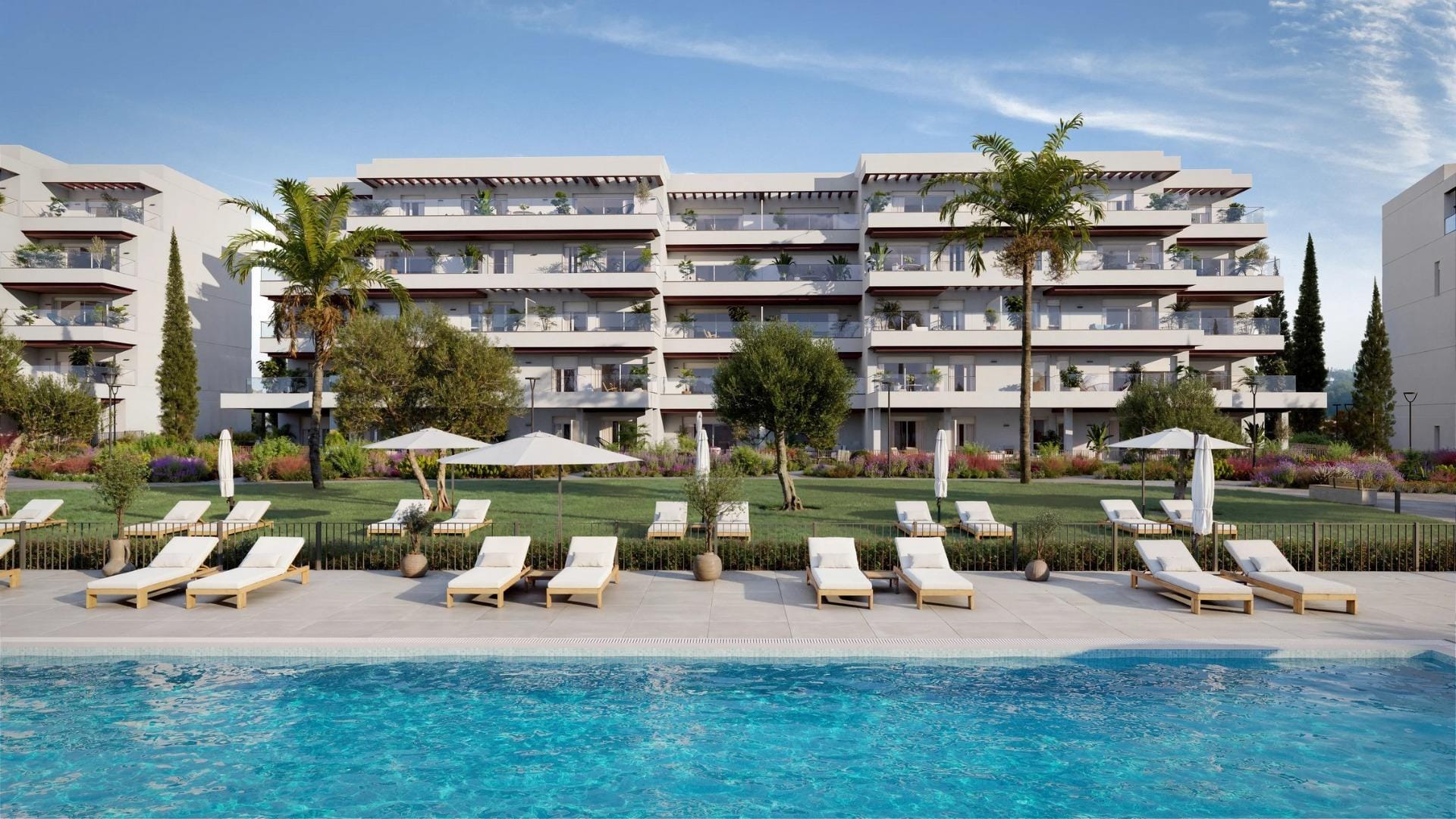
Apartment
Advantages
- Less exterior maintenance to manage
- Shared pool and facilities where provided
- A community setting
Things to weigh up
- Community fees and shared decisions
- Neighbours may be beside, above or below
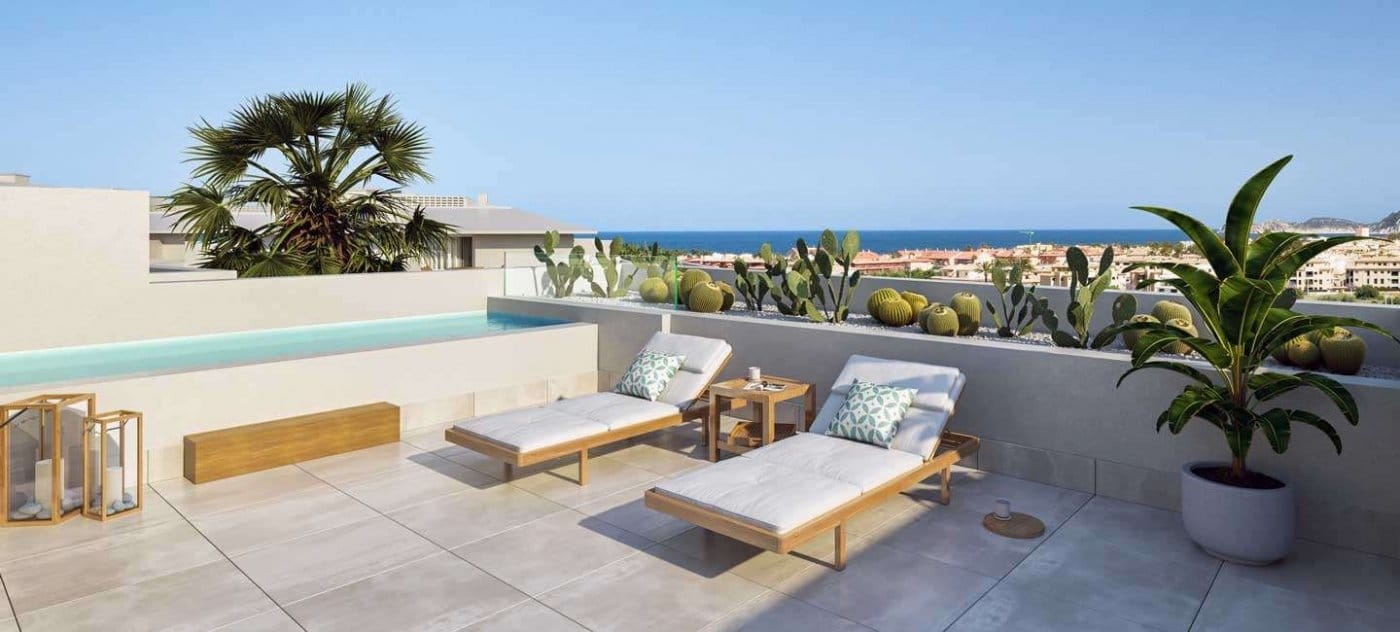
Penthouse
Advantages
- Often larger terraces and more open views
- No separate property directly above
- Potential for greater terrace privacy
Things to weigh up
- Often a higher price within the development
- More sun and wind exposure; check roof-terrace access
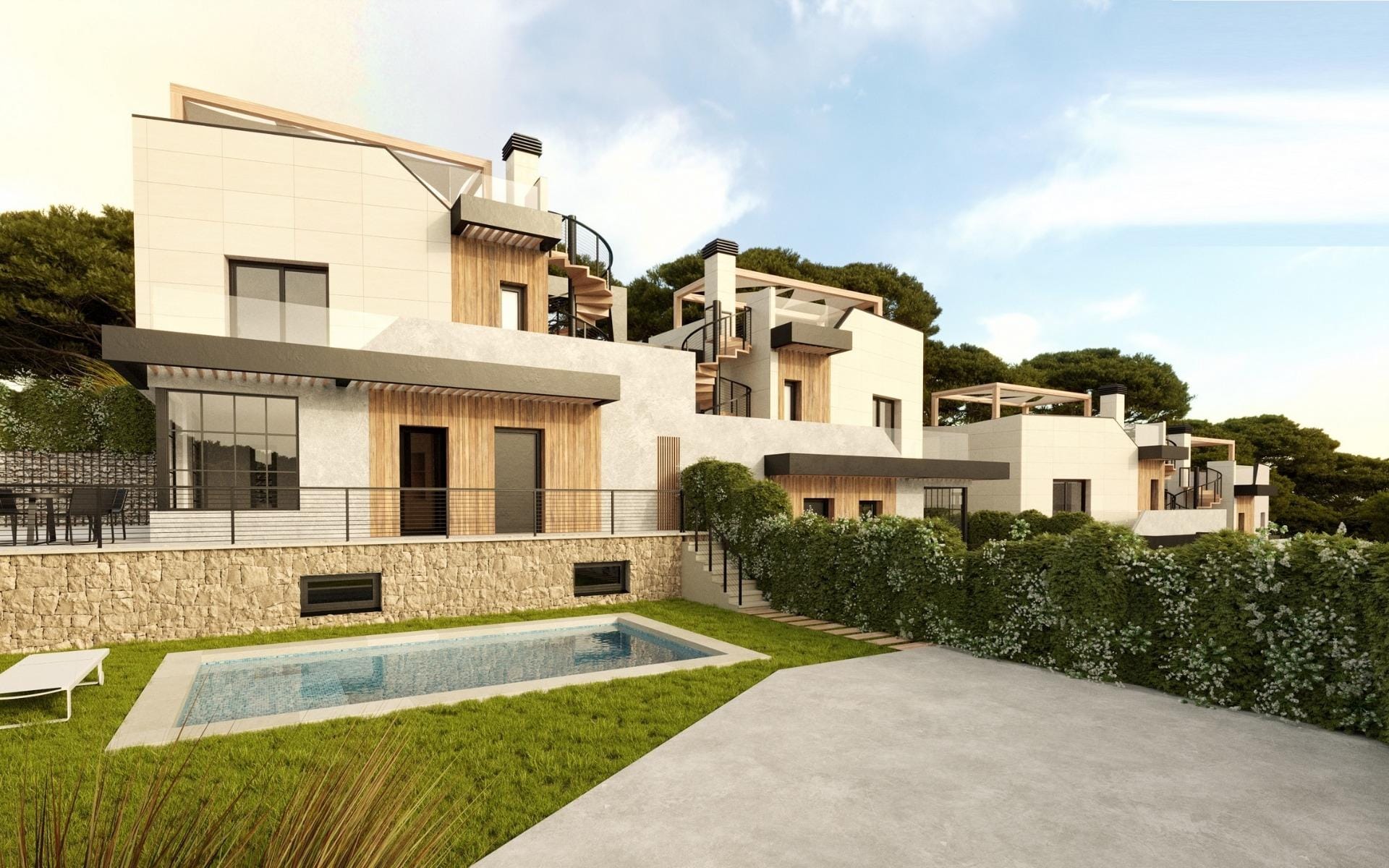
Townhouse
Advantages
- Your own entrance and a house-like layout
- Private outdoor space on a smaller plot
- Shared amenities in some developments
Things to weigh up
- Shared side walls with neighbours
- Usually stairs between living areas
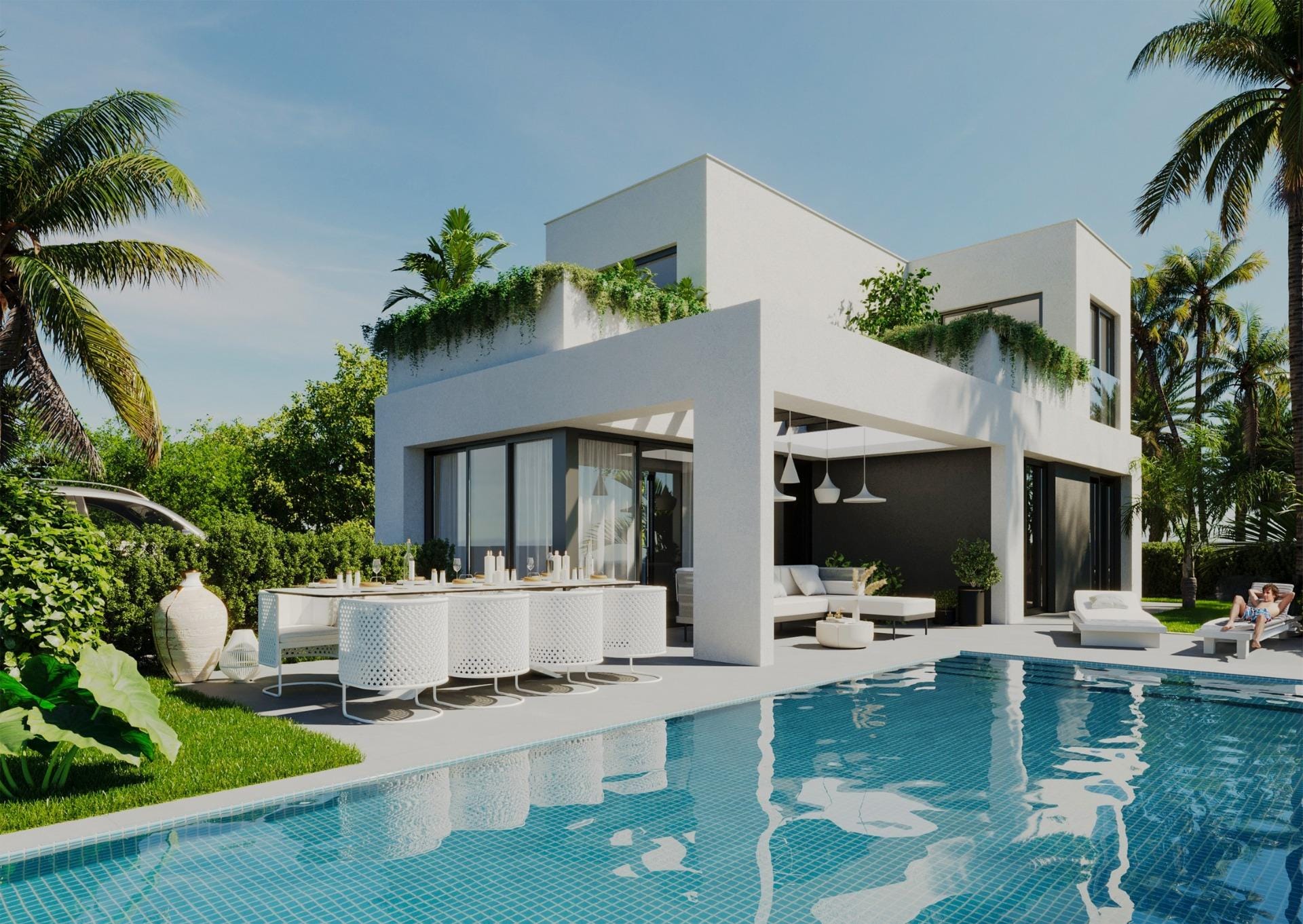
Villa
Advantages
- Your own plot and more outdoor space
- Greater privacy when detached
- Room for a garden or pool, depending on the plot
Things to weigh up
- More responsibility for maintenance
- Private gardens and pools add running costs
What does “bungalow” mean here?
On the Costa Blanca, apartments and penthouses may also be called bungalows. This often means a low-rise development with ground-floor apartments and gardens, and upper-floor properties with private roof terraces, known as solariums.
There may be a property above or below and neighbours on either side. The floor plan will show the entrance, stairs and outdoor space.
Views, orientation & privacy
Views: look at the outlook from the living room and terrace. Sea, golf, mountain or pool views can differ from one property to the next.
Orientation: which way does the property face, and when will the rooms and terrace get sunshine or shade?
Privacy: check shared walls, neighbouring balconies and paths near your terrace. The development plan helps you see how everything fits together.
Check what is included in the price. The written specification lists the finishes and equipment, such as appliances, air conditioning, parking, storage and the pool. Show properties and images may include optional extras. Your agent can explain the package for your chosen property.
If you buy off-plan, ask your lawyer to explain the delivery date in the contract and what happens if there is a delay. If the property is already built, you can view the actual property and plan the handover.
Explore our new-build properties and key-ready properties. These collections include Costa Cálida too, so check each property’s location.
Buying a resale property: the essentials
With a resale, you are buying a property that already exists. The main steps are choosing the property, agreeing the terms, completing the checks and signing at the notary.
- Condition and costs: view the exact property and consider an independent inspection. Budget for any repairs or updates.
- Legal checks: your lawyer reviews ownership, outstanding debts, unpaid IBI property tax and community fees, and the property’s paperwork.
- Payments: any reservation or deposit terms are checked before you pay. The balance is normally paid at the notary, with no construction-stage instalments.
- Taxes and fees: as with a new-build purchase, allow around 13% on top of the property price as a starting budget. Your lawyer confirms the actual costs.
Read the guide to buying a resale property on the Costa Blanca →
Property price & purchase costs
As a starting budget, allow roughly 13% on top of the property price for taxes and purchase fees on the Costa Blanca. You can use this allowance for new-build and resale purchases. It covers purchase taxes, legal fees, the notary and Land Registry. Your lawyer confirms the actual costs.
For a €300,000 property, that means budgeting about €39,000 extra, or €339,000 in total, before furniture, optional extras and any financing costs.
Our new-build properties have fixed developer prices, excluding IVA. Your agent may sometimes secure extras such as air conditioning or kitchen appliances, depending on the developer and offer.
The reservation is part of the property price. It counts towards the total you pay for the property.
Taxes on a new-build purchase
New residential properties bought directly from a developer normally carry 10% IVA, Spain’s VAT. You also pay stamp duty, known as AJD. On the Costa Blanca, in the Valencian Community, the general AJD rate is 1.4%. Lower rates may apply, including for a qualifying main residence. Your lawyer checks the rate and taxable amount for you.
Sources: Agencia Tributaria and Valencian tax legislation, Article 14.
Example: a €300,000 new-build property
€300,000
The reservation, payments during construction and final balance all go towards this price.
Your payment schedule shows when each amount is due.
€38,725
IVA, 10%: €30,000
AJD, 1.4%: €4,200
Independent legal fee (example): €3,025
Notary and registry allowance: €1,500
Estimated purchase total: €338,725
This example comes to about 13% in taxes and fees. It uses 10% IVA and 1.4% AJD on €300,000, with estimated fees including IVA. Your actual costs may differ, especially if a lower tax rate applies.
Set aside a separate amount for furniture and any extras you choose. You may also need to budget for a mortgage valuation, an optional technical inspection, NIE assistance, power of attorney, translations or currency transfers. Ask for quotes for the services you need.
New-build reservation & payments
Know the full payment schedule before you reserve. It shows what you pay now, during construction and when you receive the property, with IVA added to each payment.
Your lawyer checks that the reservation agreement and purchase contract match the price, included extras, payment dates and delivery terms discussed with the developer.
Reservation
This payment takes the property off the market for the reservation period and counts towards its price. It is normally non-refundable if you change your mind. Your lawyer explains any refund rights before you sign.
Contract & stage payments
On many developments we market, you pay around 30–60% of the price before completion, including the reservation, plus IVA. The developer’s payment plan sets out the amounts and dates.
Your lawyer checks the bank guarantee or insurance that protects your construction payments.
Completion balance
You pay the remaining price at the notary when you sign and receive the property, plus IVA on that balance. This payment can come from your own funds or an approved mortgage.
The reservation is part of this price. Developer price lists for the properties we market exclude IVA.
Have funds ready for the stamp duty, notary, Land Registry and any remaining legal fees too. Your lawyer explains the amounts and when they are paid. See the purchase-cost estimate ↑
Buying a key-ready property can be quicker, with no construction payments. The schedule depends on the property and developer.
IVA is usually paid with each reservation or construction payment, then on the remaining balance at completion. For a standard new-build residential purchase, the rate is normally 10%. Read the Tax Agency’s explanation.
Before you sign or transfer money, your lawyer checks the cancellation terms and payment protection. Confirm bank details directly through a trusted contact and keep your agreements, invoices and payment receipts together.
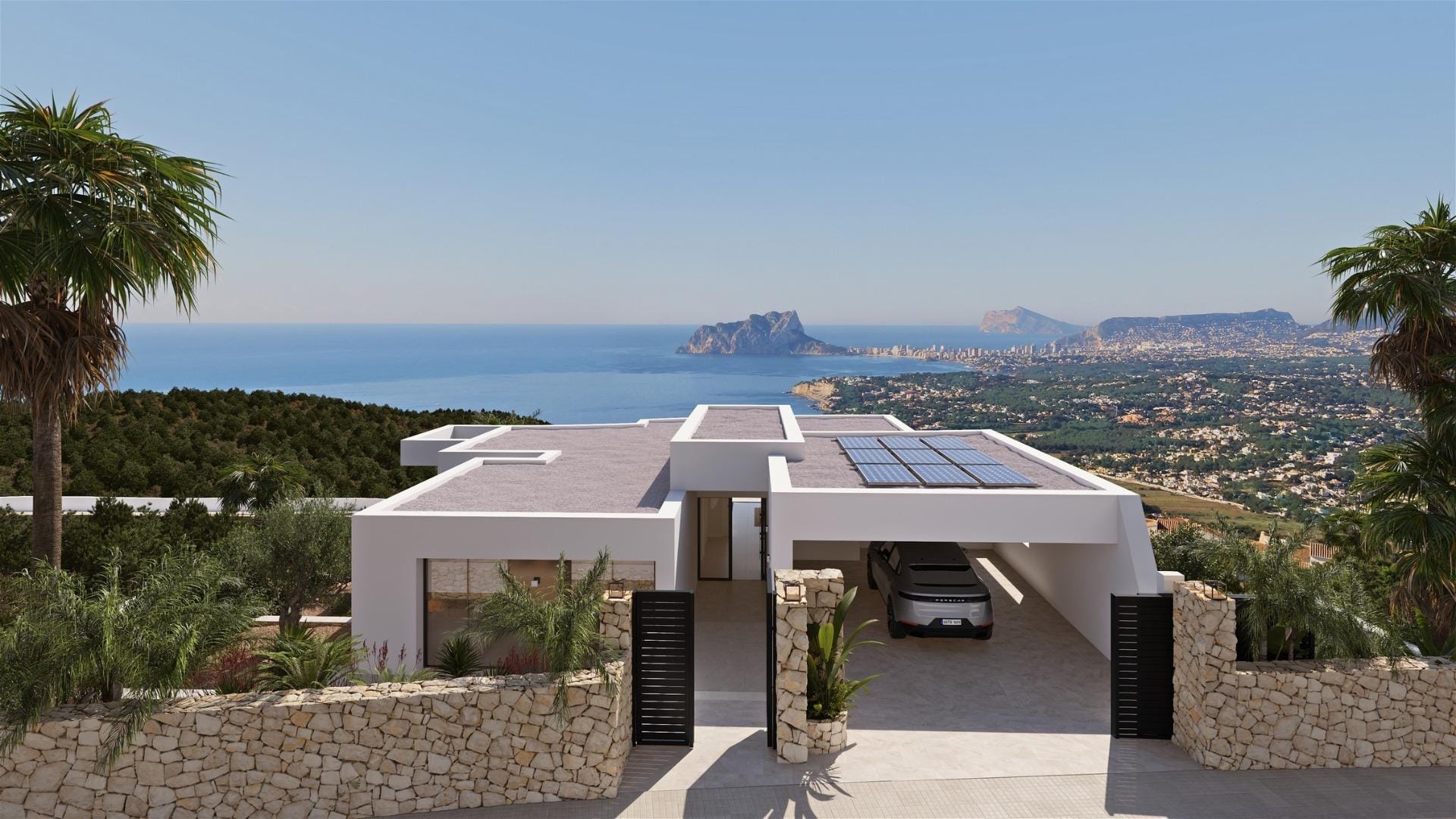
New-build villa in Cumbre del Sol, Benitachell, Costa Blanca. Developer visualisation.
New-build guarantees & protection
There are two main protections: one for money paid while the property is being built, and another for building defects after construction. Your independent lawyer checks the documents and explains what they cover.
Payments made before completion
Once the building licence is granted, the developer must protect advance payments through a bank guarantee or insurance and pay them into a special account. Your lawyer checks that the cover is for your property and your payments, including IVA and legal interest.
This protection can help recover your money if construction does not start or finish on the agreed terms. Ask your lawyer about the protection before paying, especially for an early reservation made before the building licence.
Refund rights and deadlines depend on the contract and legal requirements. Sources: Spain’s Building Act and Banco de España.
The one-, three- and ten-year periods
1 year
Damage caused by poor workmanship affecting finishes.
3 years
Damage from building or installation defects that affect living conditions.
10 years
Structural damage that affects the building’s strength and stability.
These periods run from the developer’s acceptance of the finished works, once any issues recorded at acceptance are corrected. They can start before you receive the keys. Your lawyer checks the dates and the separate deadlines for making a claim. Read the official consumer guide.
Keep your contract, specification, receipts, guarantee documents, handover checklist and any specialist inspection report. Make sure you know who to contact if something needs fixing.
Read the full guide to new-build guarantees in Spain, including the documents to request, delivery delays and reporting defects.
Mortgage & practical preparation
If you need a mortgage, speak with a bank or mortgage adviser early. They can give you an idea of what you may be able to borrow. The final loan depends on your documents, circumstances and the property valuation.
For an off-plan purchase, plan how you will pay the reservation and construction instalments. A mortgage paid out at completion will not usually fund these earlier payments. Leave room in your budget in case the final loan is smaller than expected.
Allow time for the bank’s final approval, paperwork and the notary appointment before completion.
Prepare your documents early
You will need a NIE: an identification number used by foreign buyers for the purchase and Spanish tax matters. Your lawyer can explain how to arrange it. It does not give you residence rights. Read the official NIE guidance.
Prepare your ID and documents showing where your purchase funds come from. If you need a mortgage, the bank will also ask for income records, tax returns and details of existing loans.
If you cannot attend signing, a power of attorney can let someone sign for you. Your lawyer arranges the scope and paperwork. Plan any currency transfers around your payment dates.
New-build legal checks & completion
Your agent coordinates with the developer and checks the property before handover. Your independent lawyer checks the contract and legal paperwork. The notary handles the formal signing of the purchase deed.
Legal checks at the relevant stages
- The developer and project: who owns the land, permission to build and any debts or charges affecting the property.
- Your contract: the property, plans, included features, price, payment dates and what happens if delivery is delayed.
- Your payments: the bank guarantee or insurance and the account where payments go.
- Completion: documents confirming the building is finished and can be occupied, any developer mortgage to clear, and the signing and registration arrangements.
Your lawyer starts these checks before reservation and continues them as the purchase progresses. They explain what needs to be in place before each payment or signature. See also guarantees and buyer protection.
From contract to keys
During construction, keep the progress updates and any choices or changes you agree with the developer. Changes to the specification or delivery date should be written down and reviewed with your lawyer.
Before completion, your agent checks the property with the developer, records anything needing attention and helps arrange the signing appointment. Your lawyer checks the final documents and gives you a breakdown of the money needed. Your bank joins the process if you have a mortgage. You then sign the deed and pay the balance at the notary.
New-build handover & your first year
Before handover, your agent checks the property with the developer. They review its visible condition and included items against the written specification, note anything unfinished or needing attention, and follow up with the developer. A specialist technical inspection can be arranged if needed.
At handover, you receive the keys and practical information: how the equipment works, utility arrangements, access to shared facilities and who to contact for help.
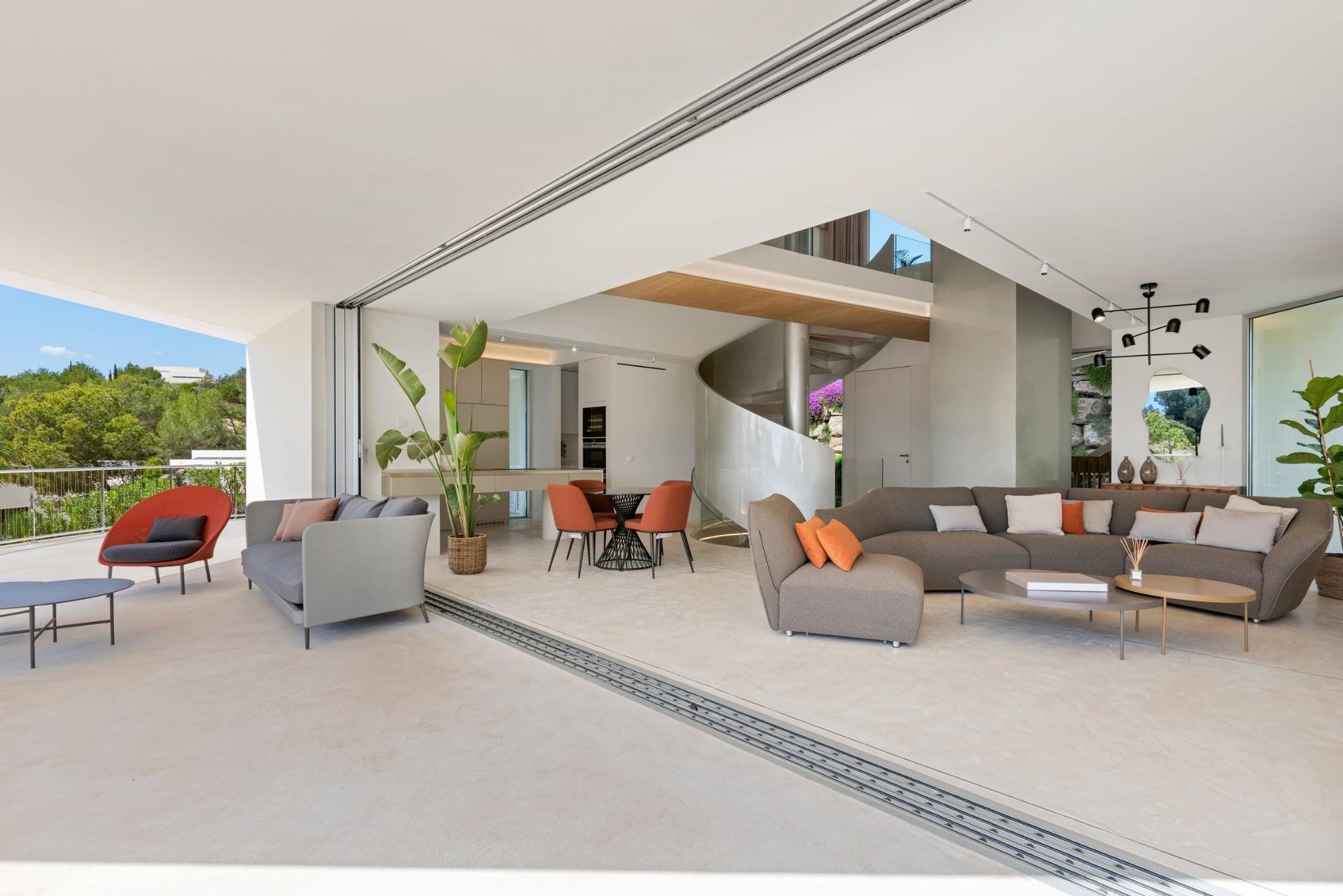
Indoor–outdoor living at Las Colinas Golf & Country Club, Costa Blanca.
Documents and follow-up at handover
Your handover documents should include guarantees, equipment instructions and access to the building’s records, known as the Libro del Edificio. Your lawyer checks the completion and occupancy documents and follows up on the deed and registration. Confirm who will arrange your utility contracts.
Keep a written list and photos of anything that needs fixing, with the follow-up dates. Your agent helps follow up with the developer; your lawyer advises if an issue affects completion or needs a formal claim.
Estimate the running costs of a new property
Ask for an estimate of community fees and what they cover. In a new development, these figures may still be provisional. Your adviser can also estimate annual IBI property tax and local waste charges.
Allow for utilities, insurance and upkeep, including a private pool or garden if you have one. If you will be away for long periods, arrange someone to hold the keys and check the property. Your tax obligations depend on where you live and how you use it.
If you plan to move to Spain
If you plan to live in Spain, check the residence and healthcare arrangements you need. Buying a property does not itself give you residence rights.
Frequently asked questions
No. It is part of the property price and counts towards the total you pay. As a rough starting budget for a Costa Blanca property purchase, allow around 13% extra for taxes and purchase fees. Furniture, optional extras and financing costs are separate.
The written specification tells you what comes with your property. Furniture, decoration and some equipment shown in images or a show property may be extras. Your agent can confirm the package before you reserve.
Your lawyer still needs to confirm the paperwork and signing date. Utilities and any final handover arrangements must also be ready. Ask your agent when you can expect to receive and use the property.
Your lawyer explains the delivery date in the contract and your options if it is missed. Keep progress updates in writing and check with your lawyer before accepting a new date.
Yes, you can usually buy and complete from abroad. Your lawyer can arrange a power of attorney so someone can sign for you, and your agent can help coordinate viewings and the handover.
No. Our guidance, property search and after-sales support are included at developer prices. Your independent lawyer, mortgage adviser and other specialists charge their own fees.